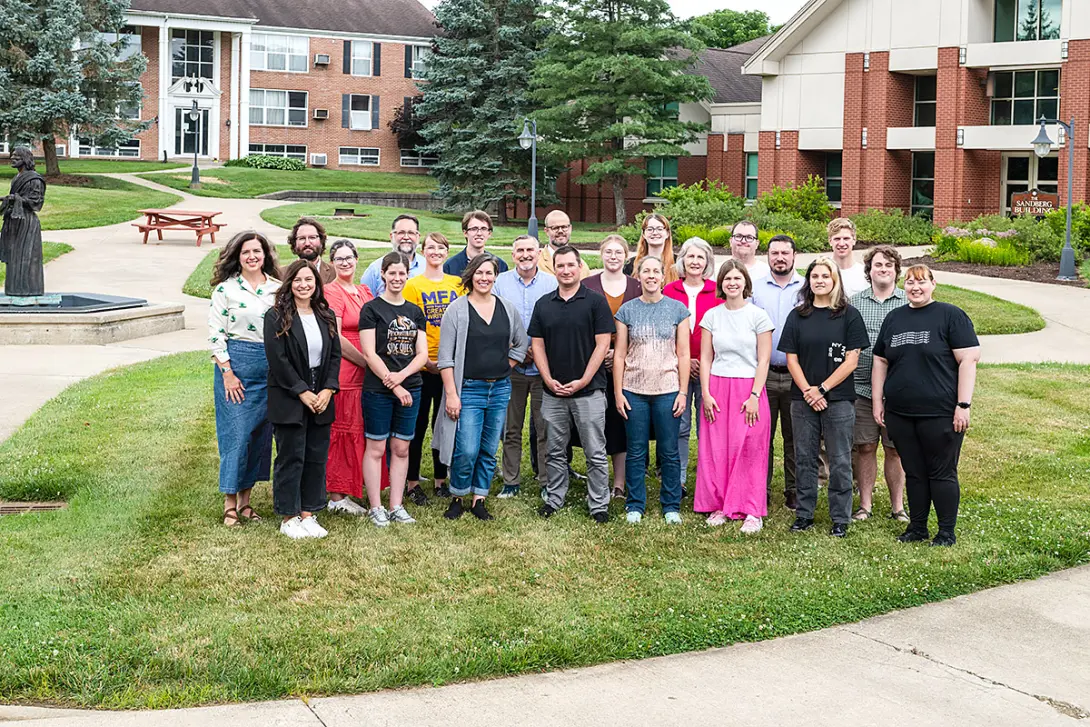
Ashland University’s MFA in Creative Writing gaining momentum after successful summer residency
ASHLAND, Ohio – A renewed sense of energy could be felt during the summer residency of Ashland University’s Master of Fine Arts in Creative Writing program, as the highest number of aspiring writers gathered on campus since prior to the COVID pandemic to immerse themselves in reading, writing workshops and mentorship from accomplished authors and editors.
At the heart of the program is a simple mission, according to writer and editor Nadya Williams, Ph.D., currently the interim director of AU’s MFA in Creative Writing. It is to “read great books (and) write your own great book.”
For novelists, poets and other writers, the experience is about more than simply earning an advanced degree. It is being part of an immersive community, challenging one another, developing relationships with mentors and peers and devoting themselves to becoming better writers. This mission is of utmost civilizational importance in this day and age, Williams wrote in her recent reflection about the MFA residency for The Dispatch.
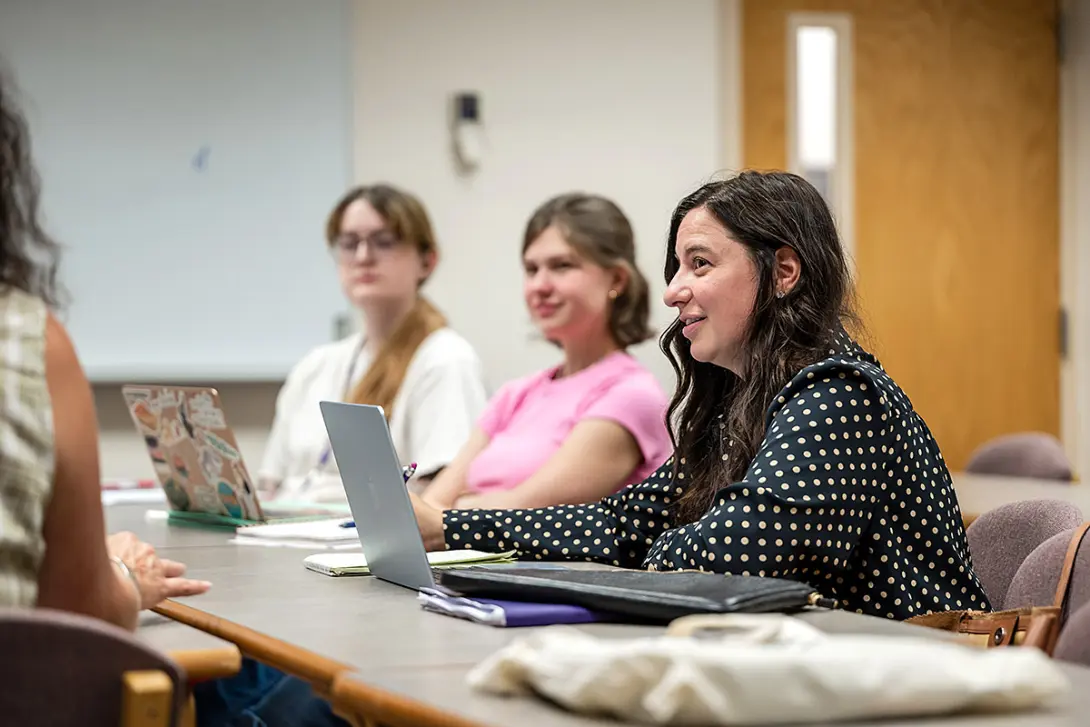
“It seems like the program draws together very different people for all the same reason — we want to be better writers,” said Emma Fulenwider, who is a literary agent and mother of two living in California. “We’re invested in each other’s success as well. We joke that the residency is ‘writing camp’ because although the instruction is rigorous, we also have a lot of fun together.”
Fulenwider, a returning student, noted the size of this summer’s class contributed to a deeper and more fulfilling experience.
“The number of incoming students this year was much higher than in the previous couple of summers, which makes for a richer experience for everyone,” she said.
The growth may have come in direct correlation with the strength of its faculty, which includes award-winning writers such as novelist Thomas Maltman, a 2026 Minnesota Book Award winner, and Steven Knepper, Ph.D., poet and editor of a leading poetry magazine, New Verse Review. The summer residency also welcomed Ashland University’s president, Dr. Jon Parrish Peede, and Robert Wyllie, Ph.D., an associate professor of political science at AU and contributing editor at The Lamp.
A grant from the Ohio Arts Council made it possible to bring several nationally recognized visiting writers to campus and to open many of the program’s events to the public, engaging the local community throughout the residency in shared love of literature. No less important, these visits from prominent writers provided students with opportunities for individualized instruction and exposure to a variety of approaches to the craft.
For Fulenwider, that access is one of the defining benefits of a top MFA program.
“Every day, I found myself thinking, ‘Gosh, we’re so fortunate to be in the room with this person,” she said. “That kind of access is one of the reasons why you invest in an MFA.”
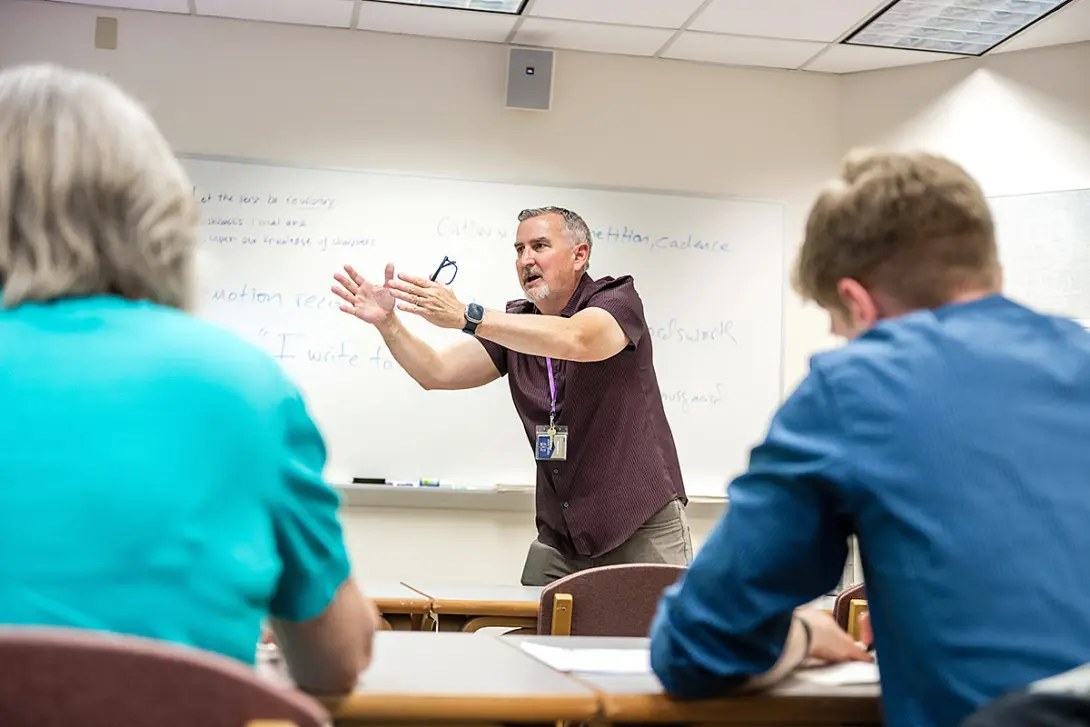
Maltman, Knepper and Wyllie joined the MFA faculty for the first time this summer and were impressed by the students and the work they produced during the residency.
“The student stories I read for workshop were exceptional,” Maltman said. “I admired their ambition, scope and well-crafted prose. I could imagine some of the manuscripts becoming books one day.”
Maltman said the experience was equally rewarding for him as a faculty member.
“There’s something about being surrounded by a group of students eager to learn and grow as writers,” he said. “I wrote alongside them, galvanized by their energy. I left renewed and reinvigorated by the whole residency experience.”
Wyllie was energized by the stark contrast from his normal political science and economics classroom conversations and how students built one another up.
“Coming from classrooms where arguments and data rule, it is reinvigorating to be among people dedicated to creativity,” he said. “The hubbub everywhere about A.I. … makes it so important to reconnect with what the human voice and human creativity can do.”
Likewise, Knepper described the creative atmosphere during the residency as “electric.”
“As an editor and teacher, I love thinking with the grain of what writers are trying to achieve,” said Knepper, a professor of English at Virginia Military Institute. “I don’t want to remake writers in my own image. I want to give them the craft tools and the feedback, I want to ask the questions, that will help them realize the best in their vision.”
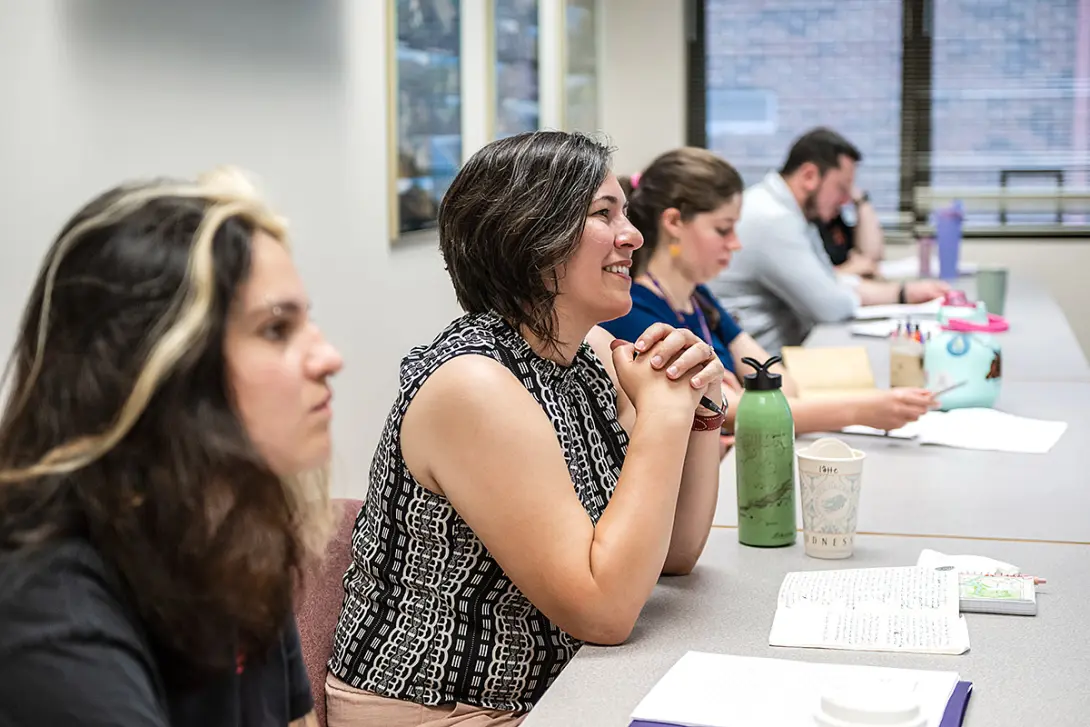
For students, that individualized mentorship is a defining part of the program.
Ryan Vandehei said the residency was demanding but rewarding, giving him the opportunity to learn from professional writers while reconnecting with his peers. During his time in the program, he wrote two novels and completed a full manuscript that serves as his thesis.
“The MFA will make you a better writer; it will push you to be more than you thought possible beforehand,” Vandehei said. “At the end of the day, you can seek a degree for the sake of a degree, or you can seek a degree that will help you hone your craft, I’d choose the latter.”
Fulenwider said the impact of the program goes beyond learning the mechanics of writing.
“I've already seen a huge improvement in my writing, and it isn't surface work that an editor could have fixed,” she said. “What I've learned over the last year ... is that writing comes from a deep place. My mentors have challenged me in ways that are personally transformative.”
For Bright Burns, a new student, the summer residency provided both practical instruction and renewed motivation.
“After this summer residency, I am newly excited to write and to read in the semesters ahead,” Burns said. “The residency connected me with excellent writers, readers and editors and gave me lots of good, practical advice for how to move forward with writing, revising and seeking publication.”
That combination of community, mentorship and craft is at the heart of the MFA’s renewed momentum.