Occupational Life Calling class, Professional Academic Advising helping students stay on track
When they were freshmen at Ashland University, Roland Ntow felt like his world was crumbling, Karin Wlodarsky didn’t know if she would stick college out and Emma Stoll was not sure where to turn after deciding nursing wasn’t for her.
Today, they are all thriving. Ntow is a senior marketing major and a resident assistant who is planning a career in supply chain management and to pursue an MBA. Wlodarsky, a sophomore, is majoring in accounting and finance, serves as a vice president for her sorority and on the leadership team for the accounting club, and recently landed a competitive internship at an accounting firm. After switching her major to psychology, Stoll, a junior, huddle leader for Fellowship of Christian Athletes and member of the Honors Program, is still on track to graduate on time and become an equine therapist.
While their backgrounds, academic interests and stories are all very different, Ntow, Wlodarsky and Stoll share a common thread. They each took the elective class Occupational Life Calling and spent time with advisors in AU’s award-winning Professional Academic Advising department to get their college careers on track.
The Occupational Life Calling class, which falls within the College of Business and Economics, has become a go-to in recent years for new students who are uncertain of which major to declare or of a career path to follow.
“It’s a class we really use to explore more about careers and majors and potential matching. We learn about the students themselves and utilize different … strength-finder assessments, learning styles,” explained Catherine Williams, a senior advisor to the president, assistant provost for Student Success and one of the instructors of the class. “It’s really to learn more about your values, your interests, personality, workplace preferences, your natural gifts.”
For Ntow, it “narrowed down (his) interests” and “helped with what classes to take,” while for Wlodarsky, who came in knowing she wanted to do something in the business world, it “helped find a sense of direction of what are next steps.” In Stoll’s case, it opened her eyes to “many more careers within psychology she didn’t even know about” and “really encouraged (her) to keep going.”
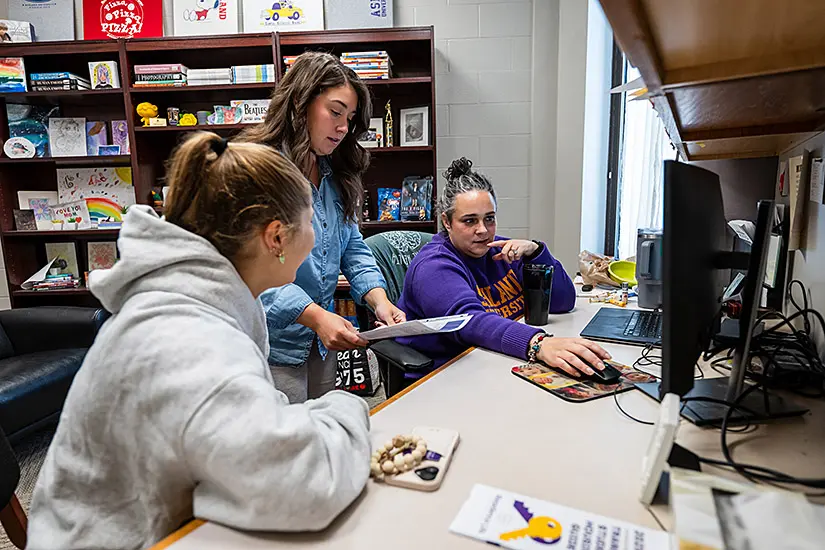
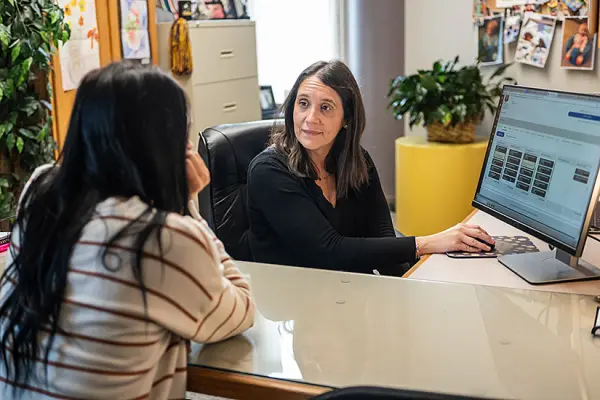
That encouragement carries over into student appointments with professional and faculty advisors. Every AU student is required to meet with either their professional or faculty advisor during their academic journey.
Those meetings, especially in their first year, proved to be valuable for Ntow, Wlodarsky and Stoll. The academic advice and resources provided were certainly useful, but it was the genuine relationship and overall support that each student found even more beneficial.
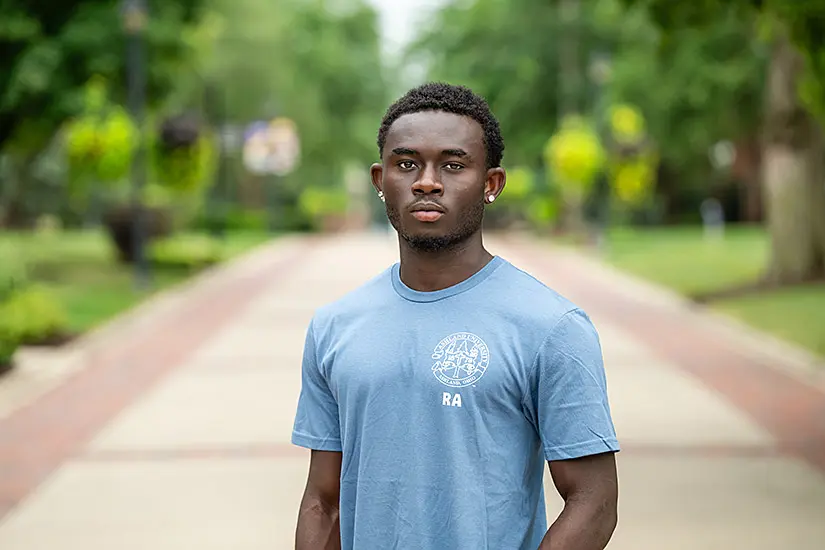
Ntow was born in Ghana, spent his early life in Africa and then moved to Columbus, Ohio, thus life at Ashland was very different than what he was accustomed to. “I was just so lost,” he admitted, but “Ms. Kristen (Herrick) and Ms. Catherine (Williams) pointed me in the right direction.”
“I’m really, really grateful for them,” he added. “They’ve made my experience here smoother. They’ve helped me understand what life is about because sometimes I was freaking out over little things. They’re making Ashland a better place for sure.”
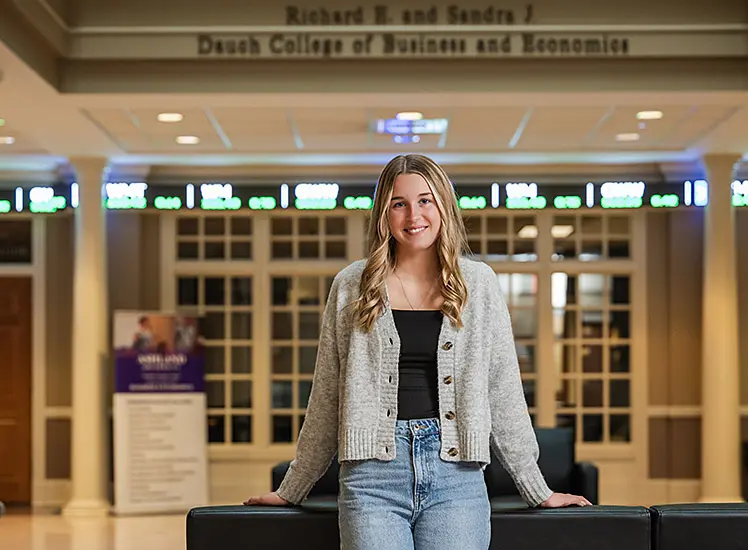
After high school, Wlodarsky simply wanted to give college a try for a year as she really didn’t know what to expect or if she was cutout for it. Thanks to weekly connections with her advisor, Alayna Ross, she quickly gained confidence and knew AU was the right fit for her future.
“(Alayna) just laid it out clear … (and) overall helped calm it down a little bit,” she said. “It ran so smoothly with my professors and everybody in Student Success helping me. The support I had … I didn’t feel as overwhelmed as I thought I would be. I’m so thankful they helped steer me in the right direction.”
When Stoll started to realize she didn’t want to study for nursing, which she had previously been “dead set on,” she was “knocked several steps back.” But her advisor, Kelly Kossick, and Williams helped reframe her mindset.
“Even at the end of the (Occupational Life Calling) class, I wasn’t really sure what I wanted to do, but that’s OK, I was still figuring things out and (they) were very supportive as always,” recalled Stoll. “(They) helped set me up so that I had tools to be able to figure out what I wanted to do next. I signed up for a couple of psyche courses … and discovered how much I really enjoy studying the mind and behavior.”
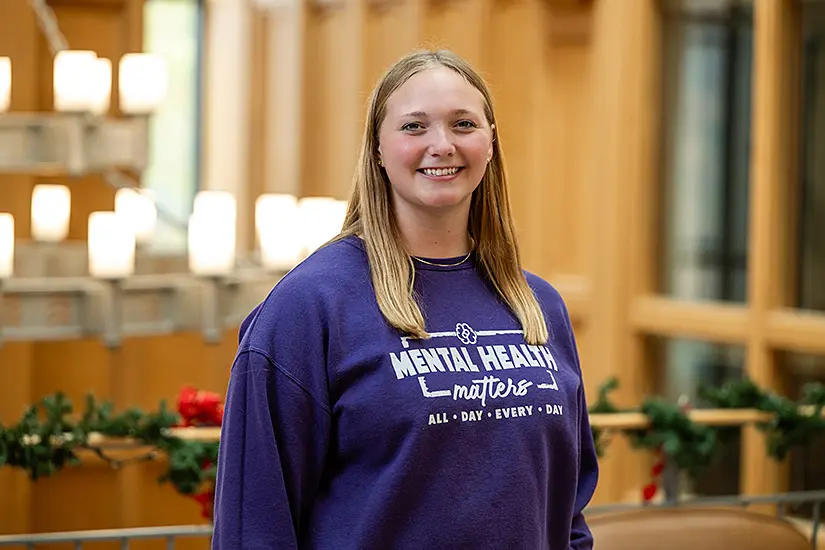
The Occupational Life Calling class, the staff from Professional Academic Advising and the sincere connections formed are all making a direct impact on students like Ntow, Wlodarsky and Stoll staying in school. AU’s retention rate, the percentage of full-time traditional undergraduate students who remain enrolled from freshman to sophomore year, has increased four consecutive years. In 2020-21, that number was 72%, while in 2024-25, it has improved dramatically to 78%.
Their peers have taken notice of the excellent work that AU’s staff of advisors is doing. Herrick and Victoria O’Brien were winners of the Advising Excellence Award in 2024 and 2025 from the Ohio Academic Advising Association, while Ross received the Outstanding New Advisor Award this year. Rae Yocum, an advisor for AU’s graduate, online and adult learners, was elected president of the OHAAA, and Sandra Evans and Ross are reps on the executive board.
Williams is the “conductor” of the Student Success team, which consists of Professional Academic Advising, the Tutoring Center, Student Accessibility and the Paul and Lani McKnight Career Center for Life Calling, and also a “university mom,” according to Wlodarsky and many others. The personal touch that she and the team offer exemplifies AU’s “Accent on the Individual” motto.
Ntow, Wlodarsky and Stoll are just three of the thousands of AU students who have been positively impacted by them, and Williams looks forward to meeting, serving and mentoring many, many more.
“We adjust to meet the student where they’re at, and work to ensure that we have a smooth handoff to whoever’s next … whether that’s a faculty member or a coach or a life calling coach, somebody to prepare you for the next step of your journey,” she summarized. “I love to be able to see students recognize their potential and continue to reach past that and keep thriving.”