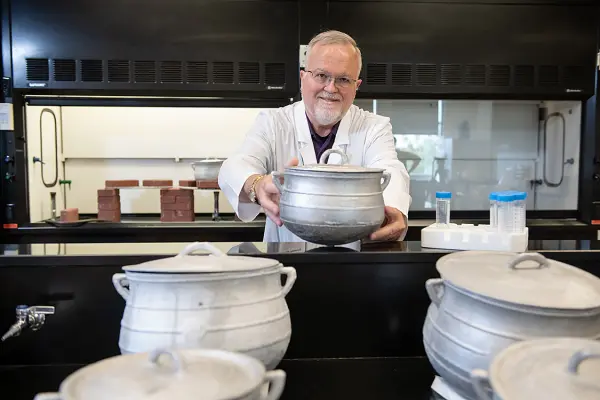
Weidenhamer appointed to Board of Directors of OK International, will continue work reducing lead exposure
ASHLAND, Ohio – Jeff Weidenhamer, Ph.D., Trustees’ Distinguished Professor of Chemistry at Ashland University, has been selected to the Board of Directors of Occupational Knowledge International (OK International), a non-governmental organization dedicated to improving public health and the environment in developing countries.
For more than a decade, Weidenhamer has collaborated with Perry Gottesfeld, president of OK International, which works to address lead poisoning and reduce exposures to silica dust hazards in small-scale mining operations around the world. They’re work together has identified lead contamination in aluminum cookware made in middle- and lower-income countries as previously overlooked sources of lead poisoning. Undergraduate students at Ashland have assisted with these investigations.
“I am excited for the opportunity to serve OK International on its Board of Directors and continue our work in reducing exposure to lead and other hazardous substances,” stated Weidenhamer.
Reducing lead exposures has been one of OK International’s focus areas over the past 25 years. Low-cost aluminum cookware that is largely made from scrap metal in dozens of countries is proven to carry serious health risks to millions of people, including children.
“It is not widely appreciated that one in three children worldwide has blood-lead concentrations elevated enough that it can cause them serious complications,” noted Weidenhamer. “Lead exposures have caused a lot of reductions in IQ for children, and can cause learning disabilities. The neurological damage caused by lead is permanent, and it’s an issue that continues to have significant impact on health worldwide.”
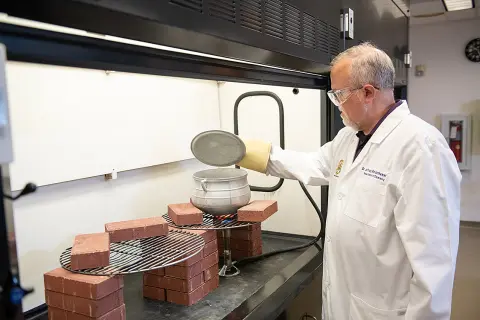
Weidenhamer has been on the forefront of research on hazardous cookware made from scrap metal. His studies have shown that using such products for routine cooking can result in significant concentrations of metals leaching into food. This research has now been replicated by other independent efforts and this type of imported cookware has been implicated in many lead poisoning cases in the U.S.
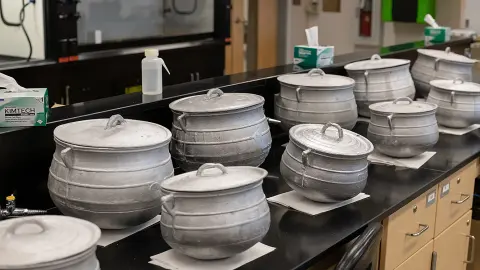
“OK International’s director, Perry Gottesfeld, contacted me for assistance in analyzing potential lead exposures in cookware manufactured in many low- and middle-income countries from recycled aluminum mixed with other scrap metal, which can contain toxic contaminants such as lead and cadmium,” explained Weidenhamer. “My students and I have carried out a series of studies on this cookware, and have found that the use of this cookware can release high concentrations of lead into food. Prior to our work, the potential for lead exposures from this cookware had not been recognized.”
Weidenhamer has been the lead author of three papers on metal exposures in aluminum cookware, and those papers have subsequently been cited more than 200 times in scientific literature. The UN Environment Programme, World Bank and other international aid agencies now recognize that recycled aluminum cookware is a significant source of lead poisoning.
Building awareness of the problems resulting from this hazardous cookware has been Weidenhamer’s goal from the outset. “All of this attention on cookware has helped spark major attention on that issue.
There’s some good work continuing to be done by a number of researchers on it,” he said.
Weidenhamer is excited to be able to continue to work with OK International and further assist with public health issues. His current research includes examining low-cost options to make safer cookware.
“Because there are no economical substitutes for this cookware, because it’s so widely used in so many countries and because of the ready availability of aluminum scrap, the question has to be whether there are things that are also relatively inexpensive and widely applicable that might reduce exposure to toxic metals,” he said. “So, that’s really what we’re working on to see if there are inexpensive ways to reduce corrosion.”
And in turn, Ashland undergraduate students will continue to have opportunities to contribute to groundbreaking research that could very well have a positive impact on society.
“It has been great for students, I think, to see the work they have done in the lab can make an impact on what is a global problem,” Weidenhamer said. “For undergraduates, the opportunity to be involved in research with such a direct tie to public health is invaluable.”