Image

As a corrections professional, you face the ongoing challenges of managing individuals who may struggle with Opioid Use Disorder (OUD) and co-occurring mental health conditions while maintaining order, safety, and security. This four-hour, online, self-paced course is designed specifically for correctional officers, supervisors, and facility staff to strengthen your ability to respond safely, effectively, and professionally to OUD-related incidents within custody settings. Learn proven strategies for de-escalation, recognizing signs of OUD, reducing risk, and connecting individuals to appropriate care and recovery resources.
This course prepares correctional professionals to confidently address the reality of the opioid crisis inside corrections facilities. With opioid-related incidents increasing nationwide, correctional staff must be equipped with practical, trauma-informed strategies that support both safety and rehabilitation. Across four focused modules, you’ll explore OUD fundamentals, co-occurring mental health conditions, overdose prevention and response, legal considerations, and de-escalation tactics designed for correctional settings.
By applying the CARE approach – Calm the Scene, Assess Behavior and Intent, Respond with Empathy and Structure, Engage Support and Follow Up – you’ll learn to manage high-stress encounters more effectively, strengthen communication, and foster a safer, more stable facility environment.

Each module builds essential skills for handling OUD-related incidents and behavioral health challenges in custody. Using the CARE framework as a guide – Calm the scene and lower tensions, Assess behavior and intent, Respond with empathy and structure, Engage support and follow up - this course delivers real-world, actionable techniques for calming volatile situations, communicating with empathy and professionalism, and supporting recovery-based responses within the correctional environment.
Included is the Operational Readiness for Corrections: OUD Power-Pack, featuring the course workbook, scenario-based exercises, eBooks, posters, quick-reference guides, and templates – all designed to reinforce learning and support everyday practice long after course completion.
By the end of this course, you’ll be able to:

Help your correctional team build the confidence and readiness to manage one of the most critical issues facing facilities today. This training gives officers and staff the tools to maintain safety, foster professionalism, and support recovery-centered approaches that improve both individual and organizational outcomes.
The faculty and content advisors for this course are leading experts in corrections, behavioral health, and crisis intervention. Their experience in training, policy development, and on-the-ground response ensures that every module is relevant, realistic, and immediately applicable. Together, they’ll help you enhance your skills, strengthen your response, and make a meaningful impact within your facility.
|
Image
|
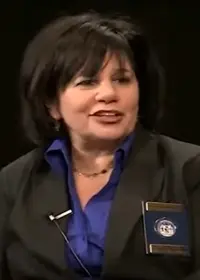
Jane SachsFaculty Chair; Director of Training Services (Ret), Maryland Department of Public Safety & Correctional Services Jane Sachs is a seasoned correctional leader with more than 46 years of distinguished public service in corrections, training, and reentry. Most recently, she served as the Director of Training Services for the Maryland Department of Public Safety and Correctional Services, overseeing training for more than 12,000 staff across 19 prisons, pre-trial facilities, and parole and probation divisions. Her leadership extended globally through a 10-year partnership with the U.S. Department of State’s Bureau of International Narcotics and Law Enforcement Affairs, delivering correctional training to over 20 countries, including extended in-country work in Uruguay, Mexico, and Armenia. These international efforts deepened Jane’s belief in the transformative power of staff training and ethical correctional practices. Prior to her state-level role, Jane served 31 years with the Montgomery County Department of Correction and Rehabilitation, rising from intern to Director of Administration and Training. She led numerous initiatives in reentry, counseling, personnel development, and offender programming, managing a 60-bed community-based correctional unit and launching a highly regarded student internship program. As a private consultant for more than three decades, she has delivered training on professionalism, wellness, and ethics to agencies nationwide. Her contributions have earned numerous honors, including the prestigious John F. “Jack” DeWitt Award for her enduring impact on the Maryland correctional community. Jane holds a B.A. from The American University. |
|
Image

|
Jack KavanaghDirector, Department of Corrections, Howard County Jack Kavanagh brings more than 40 years of correctional leadership to his role as Director of the Howard County Department of Corrections, a position he has held since 2008 following five years as Deputy Director. Prior to his county leadership, Jack spent 24 years with the Maryland Division of Correction, where he held key roles including Warden, Assistant Commissioner, and Deputy Commissioner. His deep operational and strategic expertise in corrections is grounded in decades of experience leading institutions, shaping policy, and mentoring the next generation of correctional professionals. |
|
Image

|
Morgan PickeringOwner/CPS-MH/CPC-Public Safety Morgan Pickering is a nationally recognized educator, peer counselor, and trauma-informed care specialist with extensive experience supporting law enforcement, fire, EMS, and veteran communities. As the founder of Pickering Support Services, LLC, she delivers specialized training on crisis intervention, suicide prevention, PTSD, and harm reduction. Morgan holds numerous certifications, including Certified Peer Specialist–Mental Health (CPS-MH), Crisis Intervention Team (CIT) Coordinator, and Mental Health First Aid Instructor. Her work bridges public safety and behavioral health, empowering first responders with practical tools to reduce risk and respond with compassion. |
|
Image

|
Dan LasherCorrectional Administrator Daniel Lasher is a lifelong Maryland resident with over 35 years of experience in the corrections field, including three decades in administrative leadership. Before entering corrections, he served as a firefighter and EMT for 15 years, bringing a strong foundation in emergency response and public safety to his work. Throughout his career, Daniel has demonstrated a steadfast commitment to advancing professional standards in correctional operations, leadership, and training. |
|
Image

|
Michael D. BranhamMaricopa County Constable (Arrowhead Precinct)/Presiding Constable, Maricopa County, Arizona Michael Branham is a nationally respected public safety executive and educator with over 40 years of distinguished service across law enforcement, juvenile justice, and municipal leadership. A former Director of the Arizona Department of Juvenile Corrections and Executive Director of the Arizona Criminal Justice Commission, Michael has led major organizational reforms, including reducing juvenile recidivism and facility violence through cultural change initiatives. His broad experience includes roles as Police Chief, Assistant City Manager, and Presiding Constable of Maricopa County, as well as serving on the U.S. Department of Justice Medal of Valor Board, where he recommended candidates for the nation’s highest honor in public safety. |